Every bourbon drinker eventually asks a store clerk about a bottle they've read about, and gets a look that's half sympathy, half amusement. “That one's allocated.” No shelf tag, no backroom stock, and no clear answer about when it might show up.
Allocated bourbon is the part of the hobby that runs on rumor, so here's the plain version: what allocation actually means, how the bottles move from distillery to store, what to realistically expect, how to hunt without being a nuisance, and how to keep the whole chase organized so you aren't relying on memory.
What allocation means
A bottle is allocated when people want more of it than exists. Bourbon makes that gap hard to close: whiskey released this year went into barrels years ago, so no distillery can respond to a surge in demand by simply making more. Supply is fixed by decisions made long before anyone knew the bottle would be a hit.
So instead of shipping as much as stores order, the bottle gets rationed. A distributor might receive only a few cases for an entire region, and each store gets a share — sometimes a handful of bottles, sometimes one, sometimes none. That share is the allocation.
Some bottles are allocated every year by design: annual limited releases, very old age statements, the famous names that turn up in every “holy grail” list. Others become allocated almost by accident, after a good review or a viral post empties shelves for a release that used to sit around all year.
How bottles actually move
In the US, most spirits reach you through three tiers: the distillery sells to a distributor, the distributor sells to retailers, and the retailer sells to you. Allocation decisions happen at every step. The distillery decides how much each market gets, the distributor decides which accounts get a share, and the store decides who actually gets to buy.
That last decision is the one you can influence, and stores make it in a few common ways:
- Lotteries and raffles. Enter for a chance to buy at retail. These are the fairest option and the hardest to win.
- Drops. Bottles go on the shelf at an announced (or rumored) time, first come, first served. Expect a line.
- Loyalty lists. Regular customers, often tracked by spend or by a rewards program, get offered bottles first. This is where relationships matter.
- Bundles. The allocated bottle comes paired with something that isn't moving. Not every collector loves these, but they're common.
Control states, where the state itself runs liquor sales, often handle the most sought-after releases through state-run lotteries. The details vary a lot by state, so check how yours does it.
Realistic expectations
Here's the honest part. Most hunts end with nothing, and a few end with a bottle at a fair price. Paying retail for an allocated bottle through a lottery or a loyalty list is the win. Secondary prices, wherever and however they appear, can run several times retail, and paying them is a choice to make with clear eyes rather than out of hunting fatigue.
A few things make the hunt more pleasant over the long run:
- Patience beats hype. The bottle everyone is chasing this month is often easy to find two years later. Today's must-have usually turns into next year's shelf-sitter.
- Taste before you chase. Allocated doesn't mean better for your palate. Try a pour at a bar or a bottle share before you spend a year hunting a bottle you might only find fine.
- Don't be a tater. Bourbon slang for the hype buyer who chases whatever the internet is excited about, buys by rarity instead of taste, and can't tell you what's in the bottle. Everyone is a little tater at the start. The cure is drinking what you hunt.
And if you do land a unicorn, it's worth knowing what it's worth. Not to flip it, but for insurance and for your own records. Our guide to estimating what your whiskey collection is worth covers how.
Hunt etiquette
The hunt is a small world, and the same faces show up at every drop. A few habits keep it a good one:
- Be a real customer. The staff at your regular store remember who shows up only on drop day and who buys the everyday bottles the rest of the year. Ask what they're drinking, and buy it now and then.
- Don't interrogate the clerk. “Anything special come in?” once is fine. Calling every store in the county every morning is not.
- Don't clear the shelf. When a limited bottle does land, taking one and leaving the rest for the next person is how the hobby stays friendly.
- Pay it forward. Open the bottle and share it. A pour at a club meeting or a bottle share is worth more than a sealed trophy, and the hobby is better for it.
Not legal advice, but worth knowing: in many US states, selling alcohol without a license is against the law, and that includes reselling a bottle you won in a lottery. Check your local rules before you sell anything.
Organize the hunt
The hunt goes on for years and across several stores, and memory loses track. Which store runs the lottery, and when? Did you already try that bottle at a share? Is the one on the shelf today one you own already? A little organization saves a lot of wasted trips.
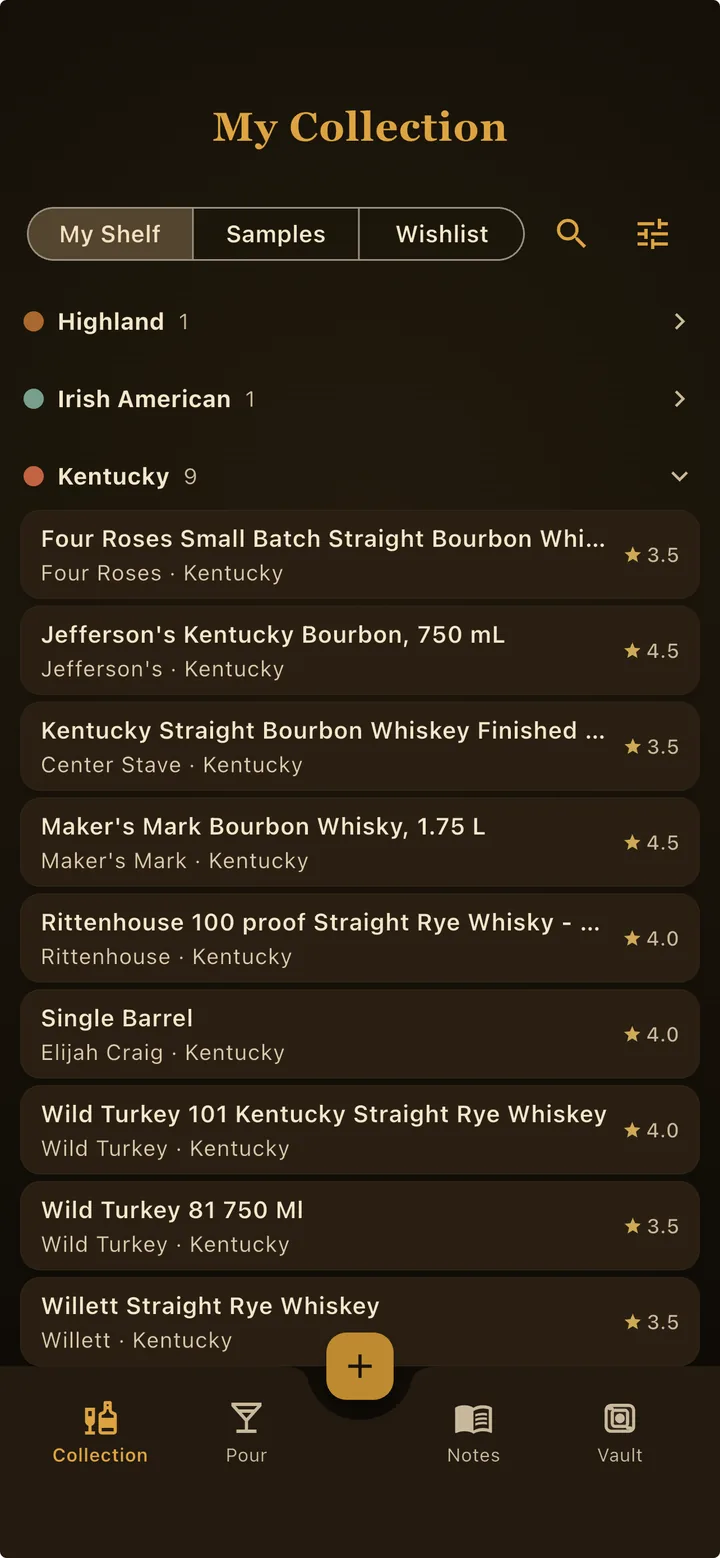
We built Whiskey Thief for exactly this. It's the private whiskey journal with an AI palate — your collection never leaves your phone. The Wishlist sits alongside My Shelf as its own tab, so the bottles you're hunting stay apart from the ones you own and don't count toward your collection's value. Your own tags cover the details memory loses — tag a hunt with the store, or with “lottery,” and filter for it later. The core journal, wishlist included, is free.
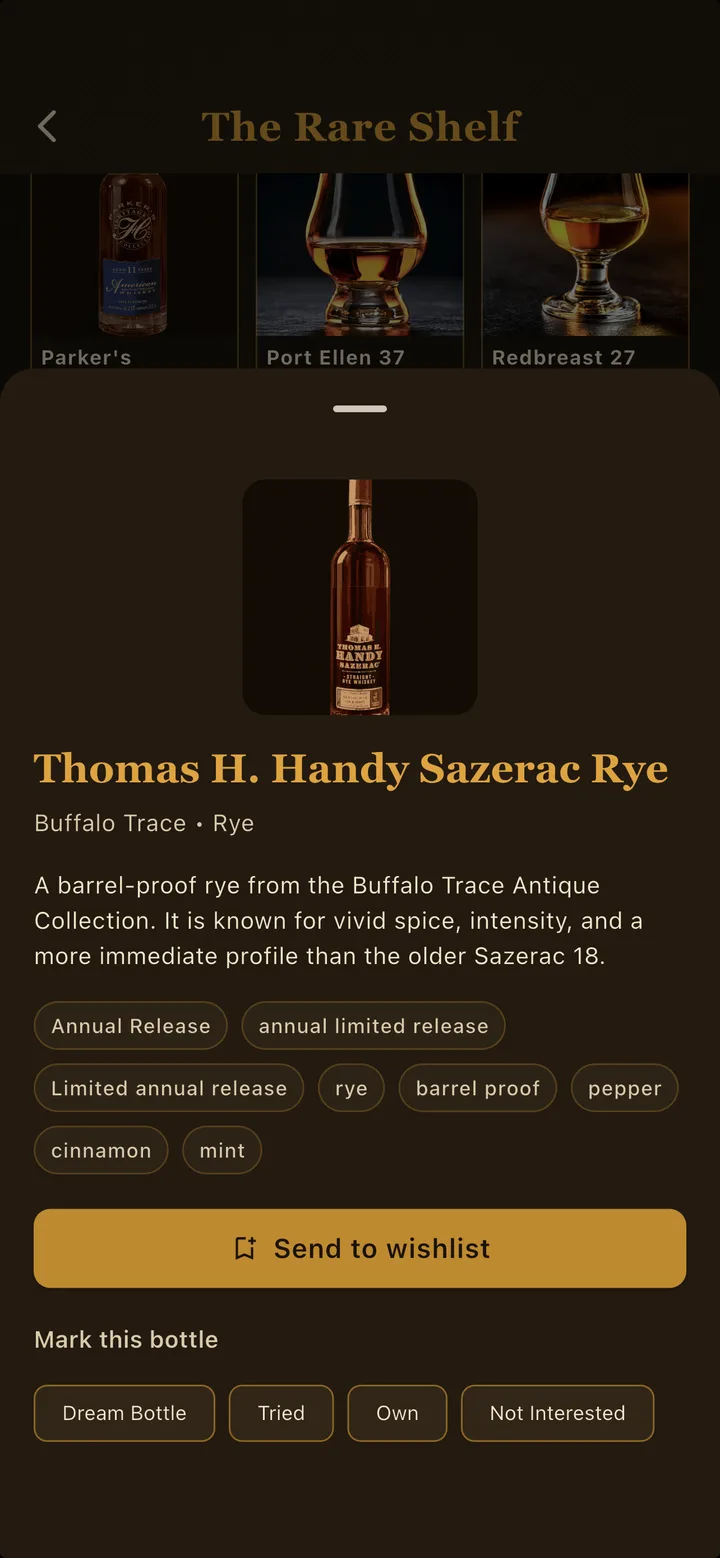
For the true unicorns, the Rare Shelf is a curated atlas of notable bottles, icons, annual releases, and closed distilleries. You can read up on a bottle before you chase it, mark it as a dream bottle, tried, or owned, and send it straight to your wishlist.
When a bottle you're hunting finally turns up in front of you, Shelf Check, a Pro feature, gives a Buy, Try First, or Pass verdict based on the bottles you've already rated, and flags it if you already own several bottles very like it. That's a useful check before you pay a bundle price for something that tastes like three bottles you already have.
The bottles are the fun part, but the hunt is mostly patience, a few good relationships, and a decent list. See everything included in the free journal.